
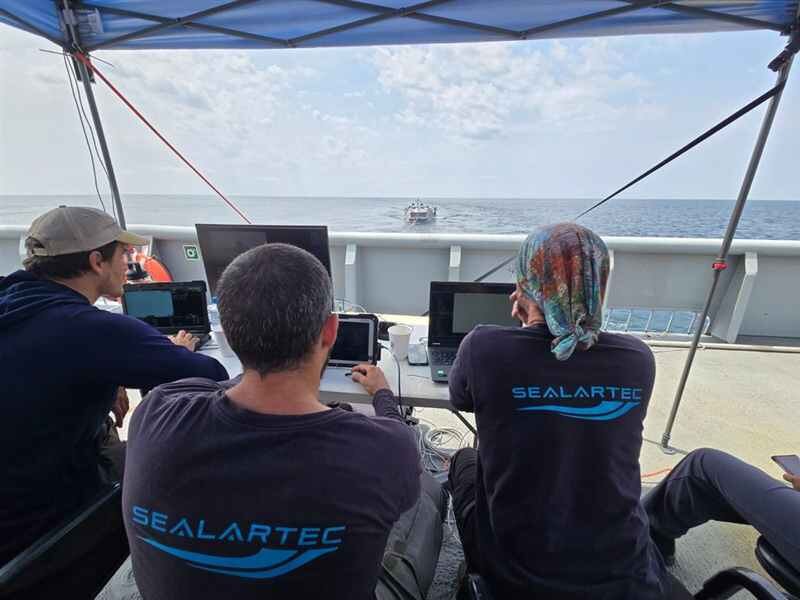
Some of the most important milestones in maritime autonomy look surprisingly quiet from the outside. A vessel on the horizon. A small team monitoring several screens. No dramatic launch, no visible spectacle, just multiple systems working together at sea.
But this was not another controlled “nice demo.” It was a step toward solving one of the most difficult challenges facing unmanned maritime operations: how to keep autonomous vessels operational at sea without repeatedly bringing them back to port or relying on people to perform every launch, recovery, connection and support task.
Autonomy Is More Than Navigation
The maritime industry often discusses autonomy in terms of navigation. Can the vessel follow a route, avoid obstacles, maintain position and operate when communications are limited or navigation signals are degraded?
These are essential capabilities, but they represent only one part of the operational challenge. The real question is not only whether an unmanned vessel can operate independently. It is whether the complete maritime system can sustain that vessel at sea.
The Missing Operational Layer
- Sensing and local positioning
- Guidance and control
- Relative motion compensation
- Mechanical capture and connection
- Communications between platforms
- Safety and failure management logic
- Fuel, power and data transfer
- Controlled disconnection and return to mission
Each individual function is complex. Making them work together reliably in a dynamic maritime environment is significantly more difficult.
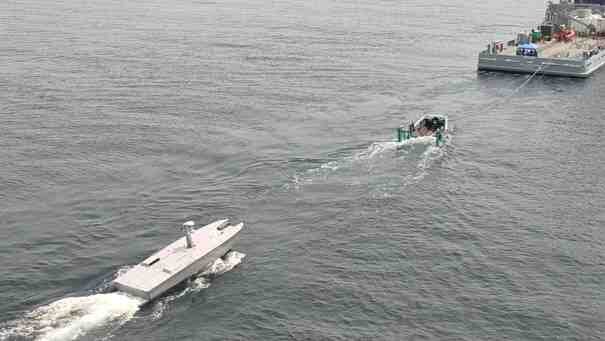
Building the Infrastructure for Persistent Autonomy
Maritime autonomy will not scale through unmanned vessels alone. It will scale when those vessels can be launched, recovered, connected, serviced and redeployed without recreating the same dependence on people and crewed support platforms that autonomy is intended to reduce.